Nutrition
Does Oatmeal Have Protein? What a Bowl Actually Provides
By PureCalc Editorial Team · Published · Educational article
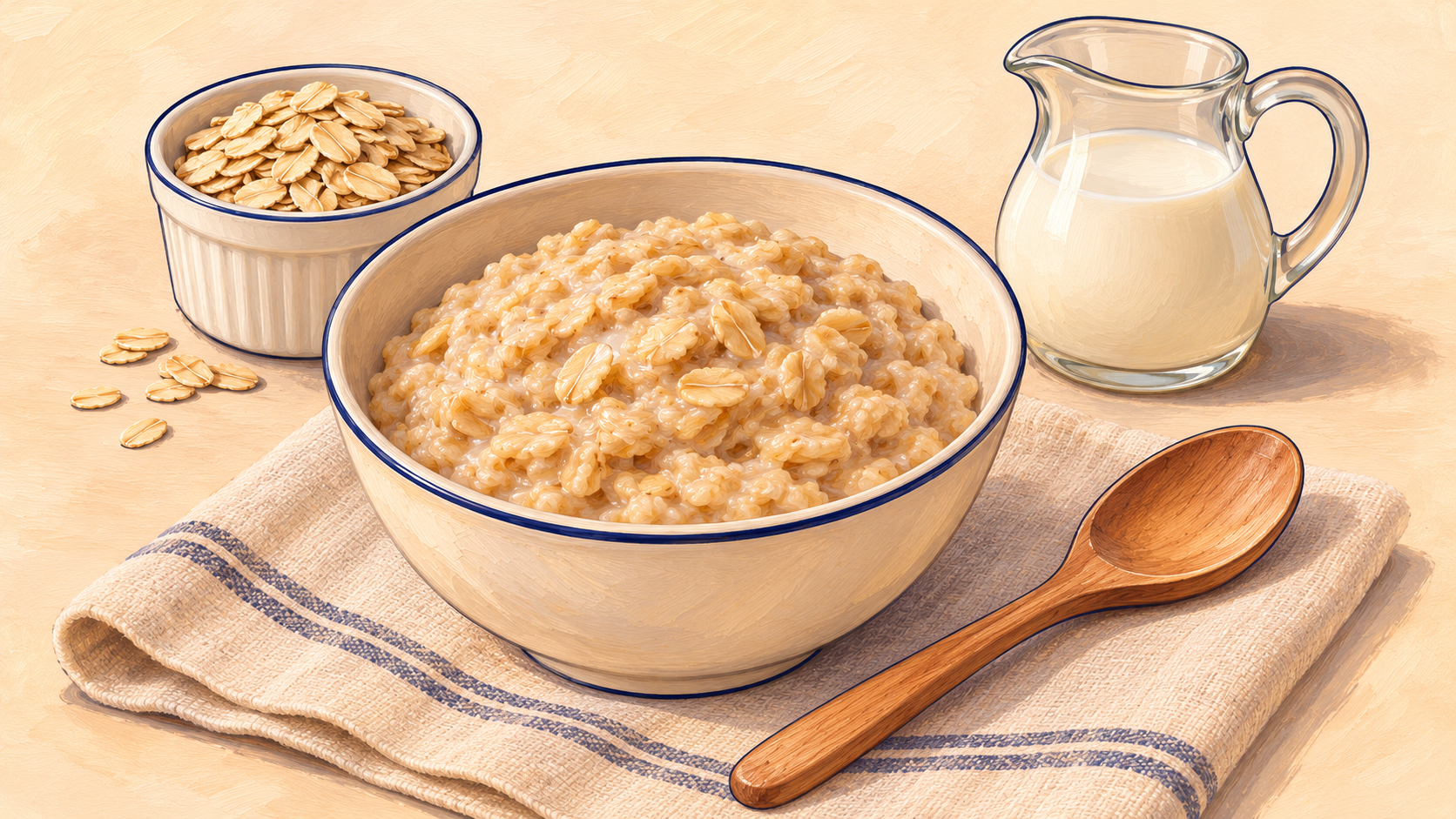
Yes. Plain oatmeal contains protein: USDA data put a 40 g portion of dry rolled oats at about 5.3 g and a cup of oatmeal cooked with water at about 5.9 g. Those are two different reference portions. Water changes the weight and volume of your breakfast without adding protein. [1] [2]
Did you measure the oats before or after cooking?
If you scooped the flakes into the pot yourself, use the dry weight or the label on your bag. If you ladled cooked oatmeal into a bowl and don’t know how much dry cereal went into it, use an entry for cooked oatmeal that matches the preparation. Pick one method. Counting both would count the oats twice.
| What was measured? | Portion | Protein |
|---|---|---|
| Dry regular or quick oats, unfortified [1] | 40 g dry | About 5.3 g |
| Regular or quick oats cooked with water, no salt [2] | 1 cup prepared (234 g) | About 5.9 g |
| Bob’s Red Mill Organic Old Fashioned Rolled Oats [3] | ½ cup dry (48 g), per label | 5 g |
The first two rows are separate USDA food records, not measurements from the same pot. The third is one manufacturer’s label for a specific product. If your bag gives a different serving weight, use its numbers. Half a cup of dry flakes and half a cup of cooked porridge are different portions.
Does cooking oats with water change the protein?
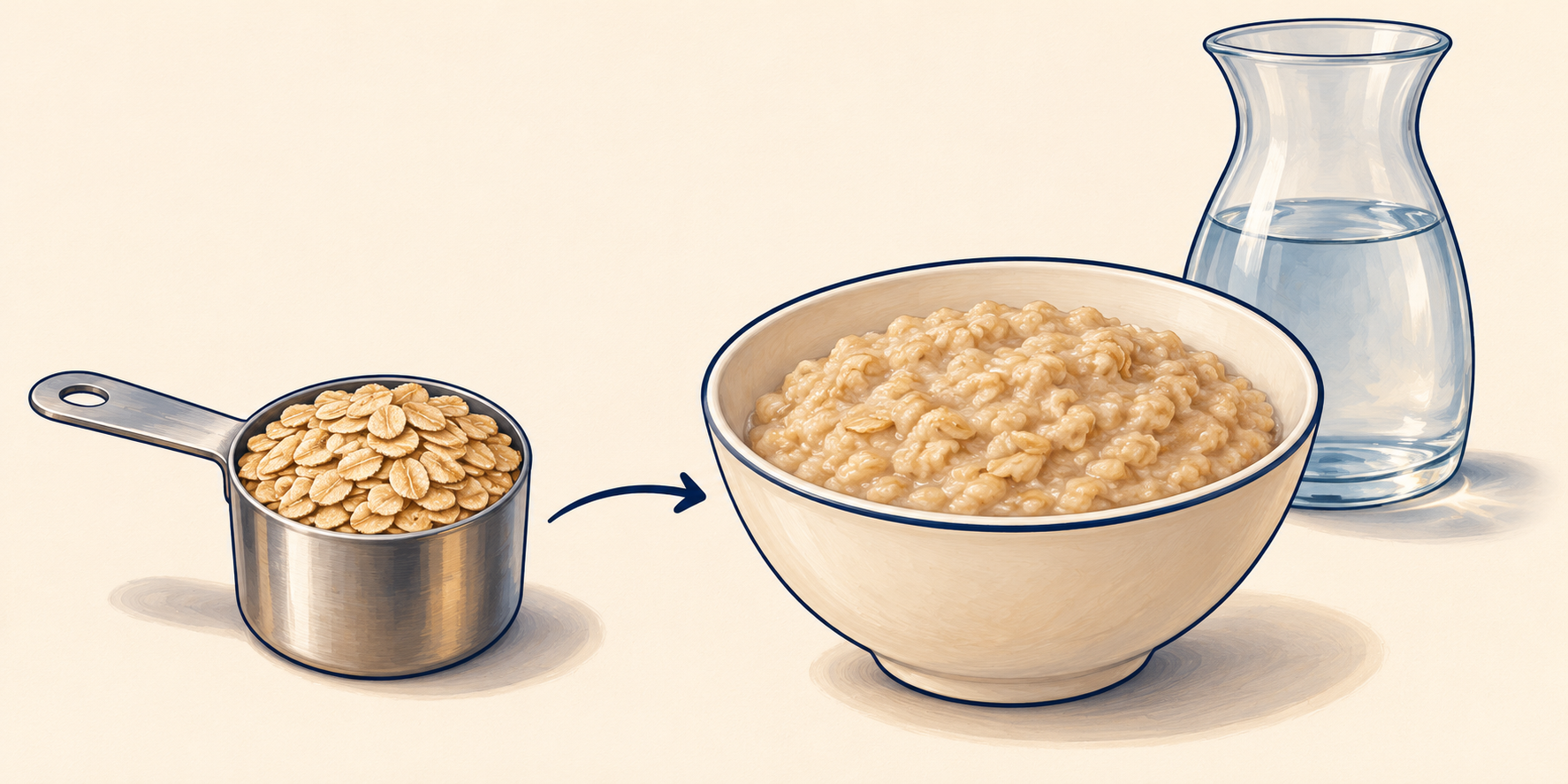
Imagine weighing 40 g of the dry oats in the first row, cooking them with water, and eating the entire batch. Your estimate is still about 5.3 g from the oats. A thinner porridge weighs more because there is more water in the bowl. Splitting that same batch equally between two bowls gives each about 2.6 g from oats, whether you like your porridge thick or thin.
How can you boost the protein in oatmeal?
The easiest change is to cook the oats with milk or soy milk in place of some of the water. If the oatmeal is already cooked, stir in plain Greek yogurt for a creamy bowl or swirl peanut butter into the warm oats. Here’s what each change adds to one bowl.
| Add to one bowl | Protein added | Bowl total, about |
|---|---|---|
| ½ cup (122 g) whole milk [4] | 3.8 g | 9.1 g |
| ½ cup (120 mL) Silk Unsweet Soymilk [5] | 4 g | 9.3 g |
| ½ cup (about 113 g) FAGE Total 0% plain Greek yogurt [6] | 12 g | 17.3 g |
| 2 tablespoons (33 g) Jif Creamy Peanut Butter [7] | 7 g | 12.3 g |
A dairy-free combination: Use the half cup of soy milk above and stir in one tablespoon of the peanut butter. The oats contribute about 5.3 g, the soy milk 4 g, and the peanut butter about 3.5 g: roughly 13 g of protein in the bowl. These estimates assume you eat the whole portion. If you share the pot, divide its protein between the bowls before counting toppings added to just one.
If you prefer protein powder, use the protein line on your package rather than the weight of the scoop. For example, if one serving lists 24 g of protein, half a serving adds about 12 g. That’s an illustrative label, not a standard scoop size. See how protein powder is made and how to read its label. For other yogurts, nut butters, seeds or plant drinks, use their own labels and the amount you actually add.
Is a protein oatmeal packet the same as plain oats?
Look at what the nutrition panel describes. A packet with an added protein ingredient may already include that ingredient in its per-serving total. Don’t add it again as a topping. “Fortified” alone doesn’t tell you that protein was added; it may refer to vitamins or minerals. Compare the protein line and serving weight, and check whether the values are for the dry mix or for the cereal prepared as directed.
How do you choose oatmeal without added sugar?
If avoiding added sugar matters more to you than getting the most protein per serving, start with the “Includes … g Added Sugars” line on the Nutrition Facts panel. A protein claim on the front tells you nothing about whether the oats are sweetened. Total sugars include both naturally occurring and added sugars, so the two lines can show different numbers. [8]
For example, Bob’s Red Mill Organic Old Fashioned Rolled Oats lists just whole grain oats. Its ½-cup (48 g) dry serving has 5 g protein, 1 g total sugars and 0 g added sugars. That’s a useful option even if a flavored packet advertises more protein. When buying a packet, check how many servings you’ll eat. [3]
For flavor, try a pinch of plain ground cinnamon in the warm oats. A cinnamon-sugar blend is a different ingredient. If you’d also like more protein, stir in plain Greek yogurt or use unsweetened soy milk; check the added-sugars line on those labels, too. Or just enjoy the oats with cinnamon.
How does oatmeal fit into your day?
A bowl’s protein total answers a different question from how much protein you might need in a day. For general adult reference amounts, use the protein intake calculator. If you already have a daily amount in mind, our meal-planning guide shows how to count breakfast alongside the rest of your meals.
For another food-specific example, compare protein in different tofu types and portions.
Sources
- USDA FoodData Central: regular and quick oats, dry, not fortified (173904). Protein: 13.15 g per 100 g.
- USDA FoodData Central: oats cooked with water, without salt (173905). Protein: 2.54 g per 100 g; one cup is 234 g.
- Bob’s Red Mill: Organic Old Fashioned Rolled Oats. Manufacturer’s dry serving and protein label.
- USDA FoodData Central: whole milk, 3.25% milkfat, with added vitamin D (171265). Protein: 3.15 g per 100 g; one cup is 244 g.
- Silk Unsweet Soymilk. Label: 8 g protein per cup (240 mL).
- FAGE Total 0% plain Greek yogurt. Tub label: 18 g protein per ¾ cup (170 g).
- Jif Creamy Peanut Butter. Label: 7 g protein per 2 tablespoons (33 g).
- FDA: Added Sugars on the Nutrition Facts Label — how total sugars and added sugars are listed.