Nutrition
How Much Protein Is in Tofu? By Type, Serving and Block
By PureCalc Editorial Team · Published · Educational article
There isn’t one protein number for all tofu. In the named products below, an 85 g serving provides 5–9 g of protein, or about 5.9–10.6 g per 100 g. These are examples, not the full range available. The most useful number is the one on your own package, adjusted for the amount you eat. [1] [2] [3] [4]
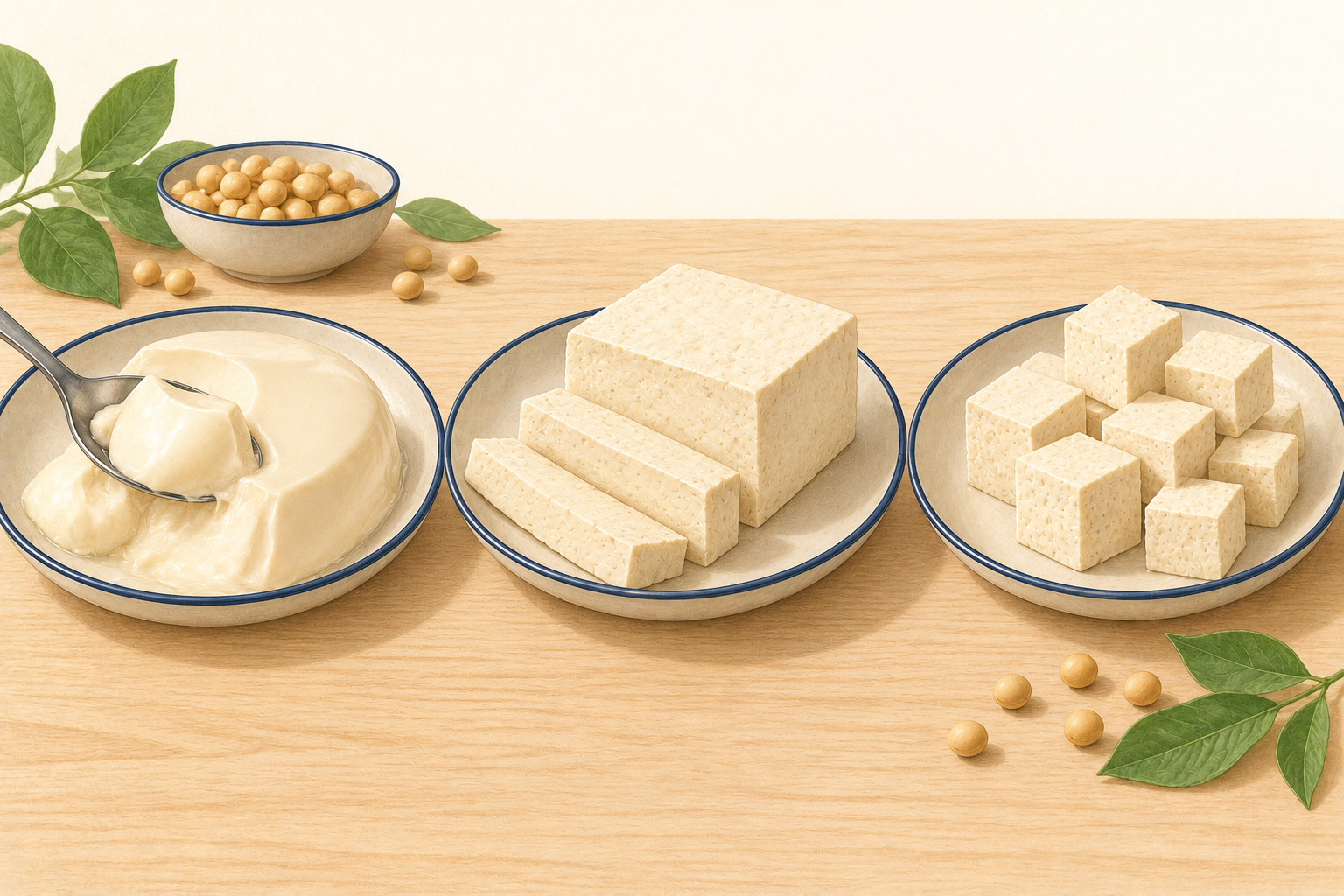
How much protein is in different types of tofu?
Compare the same weight before deciding that one tofu has more protein than another. This table uses manufacturers’ published U.S. nutrition information. The per-100 g column is calculated from the stated 85 g serving and rounded to one decimal place.
| Specific product | Protein per 85 g | Calculated per 100 g |
|---|---|---|
| Mori-Nu Silken Soft [1] | 5 g | 5.9 g |
| Mori-Nu Silken Firm [2] | 6 g | 7.1 g |
| Mori-Nu Silken Extra Firm [3] | 7 g | 8.2 g |
| Nasoya Organic Extra Firm [4] | 9 g | 10.6 g |
These values describe these particular products, not every tofu with the same texture name. Check your package if its label differs: products and serving sizes can change. The calculated decimals make comparisons easier; they do not make rounded label values more precise.
Is silken tofu the same as soft tofu?
Texture names can be confusing. Silken tofu is smooth and custard-like, while regular firm tofu holds its shape well. Importantly, silken tofu itself can be sold as soft, firm or extra firm—the first three rows above are all silken products. A carton labeled “silken firm” should not automatically be treated as the same product as a refrigerated block labeled “firm.” [1] [2] [3] [5]
Choose the texture that suits the meal, then check its protein amount. Silken tofu works in blended sauces; firmer tofu is easier to use in cubes or slices. A larger number on a different package is not, by itself, a reason to switch textures in a recipe. [5]
How do you calculate protein in your portion?
Find two numbers on the label: the serving weight in grams and the grams of protein per serving. Then use:
For an illustrative tofu labeled 9 g protein per 85 g, a 170 g portion is two label servings: 170 ÷ 85 × 9 = 18 g protein. A 100 g portion works out to about 10.6 g. Substitute your own label values rather than assuming every tofu matches this example.
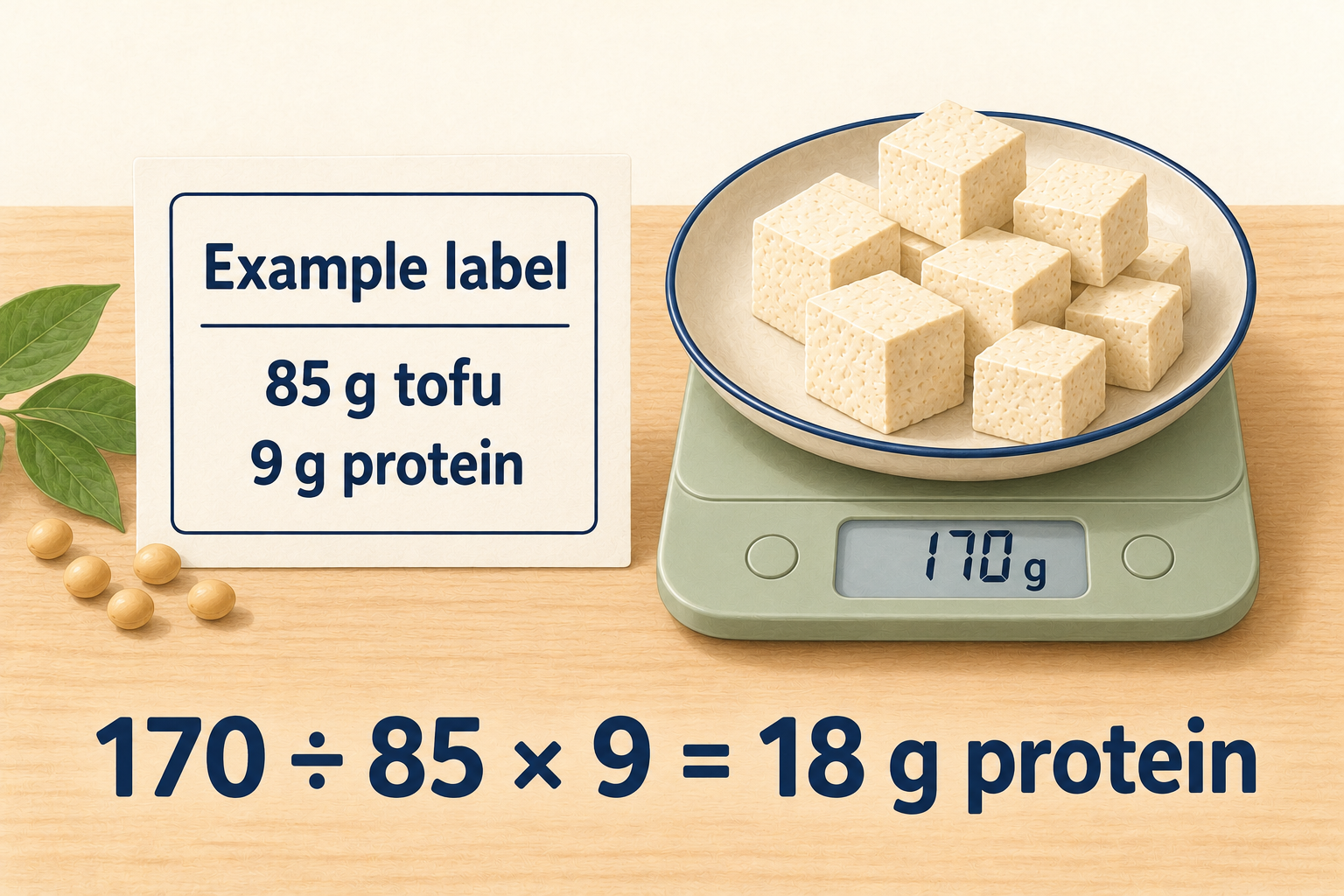
A label serving is a reference for reading the nutrition information, not a personal meal prescription. The FDA explains that serving sizes reflect amounts people typically consume. You may eat a different amount, so adjust the calculation accordingly. [6]
How much protein is in a whole block of tofu?
“One block” is not a standard weight. A quick estimate is protein per serving × servings per container. For example, a label with 9 g per serving and about 4.5 servings gives roughly 40.5 g in the container. Half that block would be roughly 20 g. Nasoya’s published extra-firm label uses those serving figures. [4]
Treat this as an estimate: “about” servings and rounded protein figures are not exact measurements. Use the edible tofu amount and the preparation basis on the label; do not count packing liquid as tofu. If you divide a block into four equal portions, each portion represents about a quarter of its total protein estimate.
Why do tofu protein numbers differ online?
Before comparing two numbers, check whether they describe:
- The same product: silken firm and regular extra firm can have different labels.
- The same quantity: 85 g, 100 g and a whole block are different amounts.
- The same preparation: an uncooked block and a cooked dish with sauce are different entries.
- The current package: a database entry may describe an older label or another package size.
Water content also varies with texture; Rutgers describes extra-firm tofu as denser and lower in moisture than firm tofu. Pressing removes water, but does not create protein. Avoid applying an unpressed weight-based label value directly to the same weight after substantial pressing or cooking. For a simple meal calculation, work out the protein in the tofu used before cooking, then divide by the fraction of the finished dish you eat. [5] [4]
How can you fit tofu into your protein total?
Start with the portion you actually plan to eat. Add its calculated protein to the other ingredients in the meal; do not count the whole block if the recipe serves several people.
If you want context for a daily amount, the protein intake calculator explains general reference ranges and their limits. Our guide to spreading protein across meals helps turn a daily reference into practical meal examples. Neither requires every meal to contain the same amount.
Curious about soy ingredients in supplements instead? How protein powder is made explains that separate manufacturing topic. This article focuses on portions of tofu, not powdered protein.
Quick questions
Does firm tofu always have more protein than silken tofu?
Do not rely on the name alone. Compare the protein for the same weight on the two labels. “Firm” is also used within silken product ranges.
How much protein is in 200 g of tofu?
It depends on the label. Using the illustrative 9 g per 85 g value, 200 ÷ 85 × 9 gives about 21.2 g. A different product needs a different calculation.
Is a cup of tofu a reliable serving measure?
Use a cup measure if your product’s label supplies one. Otherwise, weighing your portion avoids guessing how tightly cubes, slices or crumbles fill the cup.
Sources
- Mori-Nu: Silken Soft Tofu — published U.S. serving and protein information.
- Mori-Nu: Silken Firm Tofu — published U.S. serving and protein information.
- Mori-Nu: Silken Extra Firm Tofu — published U.S. serving and protein information.
- Nasoya: Organic Extra Firm Tofu — current website nutrition-label image and preparation information.
- Rutgers Cooperative Extension: Tofu Made Easy — tofu textures and uses, June 2025.
- FDA: Serving Size on the Nutrition Facts Label — interpreting label servings.
General educational information. Not individualized nutrition or medical advice.