Nutrition
How is protein powder made?
By PureCalc Editorial Team · Published · Educational article
Protein powder is made by separating and concentrating protein from ingredients such as milk, peas or soy, then processing it into a dry powder. The method depends on the source: dairy proteins often use membrane filtration, while plant proteins can use extraction processes. Flavorings or other ingredients may be added to the finished product. [1] [2] [4]
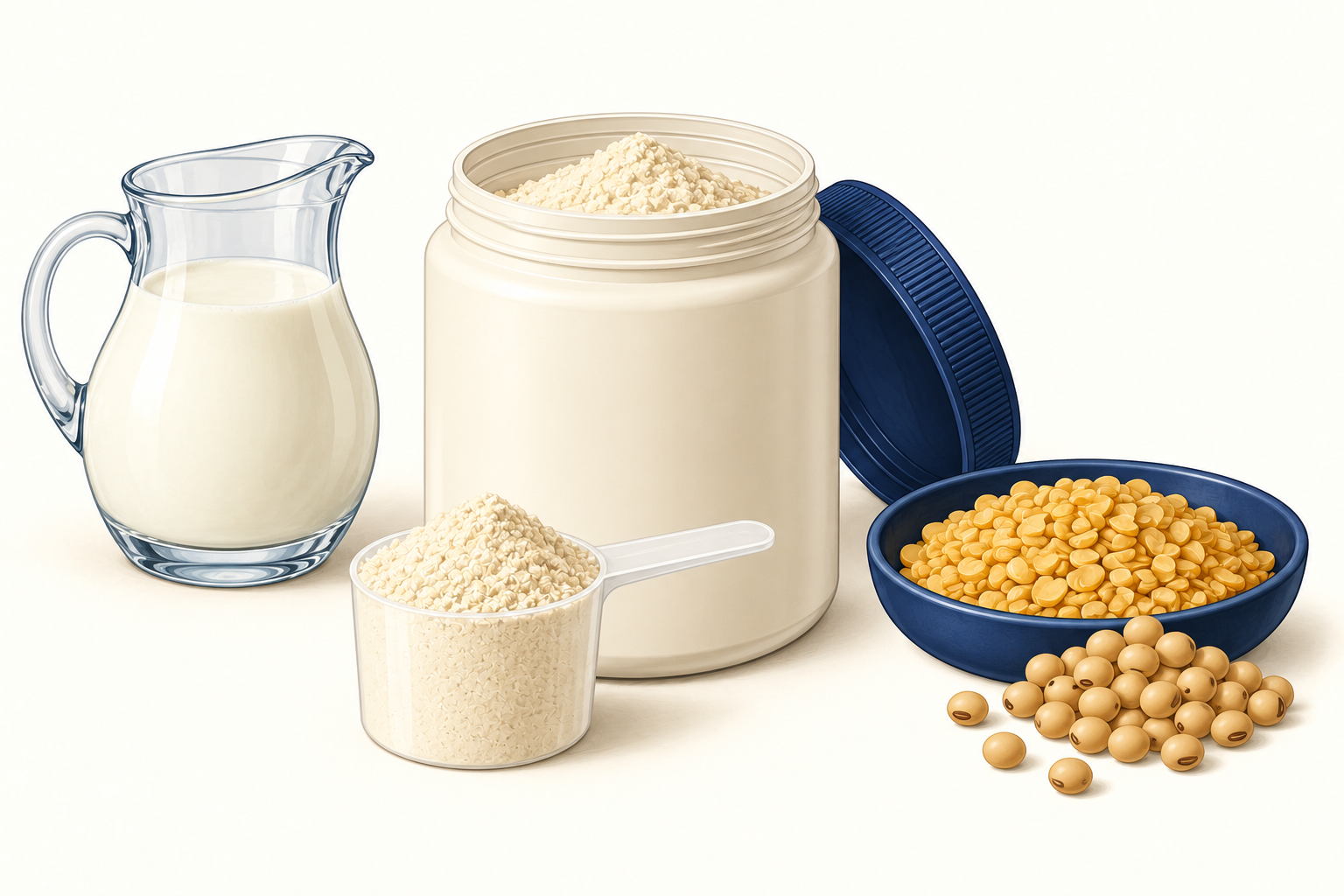
Does protein powder start with milk or plants?
Both are common. Whey and casein come from milk. Plant-based products can use peas, soy, rice or other ingredients, and some powders combine sources. The name on the ingredient list helps you identify the starting material; the front of the tub may simply say “protein.” [1]
It helps to separate two questions: where did the protein come from? and how was it processed? “Pea” answers the first. “Isolate” describes the resulting ingredient more specifically. Neither term, by itself, tells you how much protein is in your scoop.
How does milk become whey or casein powder?
In cheesemaking, casein forms curds while whey remains in the liquid. Manufacturers can process that liquid to recover its proteins. Some whey ingredients instead come directly from filtered skim milk, so whey does not always pass through cheesemaking. [2]
Membrane filters separate components. For example, ultrafiltration retains larger protein molecules while allowing water and smaller dissolved components, including lactose, to pass through. Further processing can increase the proportion of protein. [2]
Casein has several production routes. Micellar casein can be separated using membrane filtration. Acid or rennet casein is made by causing casein to form curds, which are washed, concentrated and dried. These are related milk ingredients, but they are not all produced the same way. [3]
How are plant protein powders made?
Plant processing also separates protein from other parts of the starting ingredient. For a specific example, ingredient manufacturer Roquette describes extracting its pea protein from yellow peas using a water-based process. That explains its own ingredient; it does not mean every plant protein brand follows the same method. [4]
Look for the actual protein source rather than assuming all plant powders are interchangeable. A product labeled as a blend may contain several protein ingredients. For manufacturing details beyond the label, the producer’s technical documentation is more useful than a generic description of “plant protein.”
How does the liquid turn into powder?
Spray drying is a common method for dairy protein ingredients. A concentrated liquid is dispersed into small droplets in hot air; water evaporates, leaving dry particles that are collected. The process may also include further drying or treatment to adjust how the powder handles and mixes. [3]
The final tub may contain more than the protein ingredient. Flavorings, sweeteners and other additions can change the finished formulation. Check the ingredient list rather than assuming an unflavored or flavored product contains only protein. [1]
What is the difference between concentrate and isolate?
| Term | What it tells you |
|---|---|
| Whey concentrate | Protein has been concentrated, but the ingredient still contains other whey components. |
| Whey isolate | Further separation produces an ingredient with a higher proportion of protein and less of some non-protein components. |
| Finished protein powder | The product you buy may combine protein ingredients with other additions. Read its per-serving values. |
These descriptions help explain processing; they are not a ranking of which product you need. Ingredient specifications and a flavored product’s nutrition panel answer different questions. [2]
What should you look for on the label?
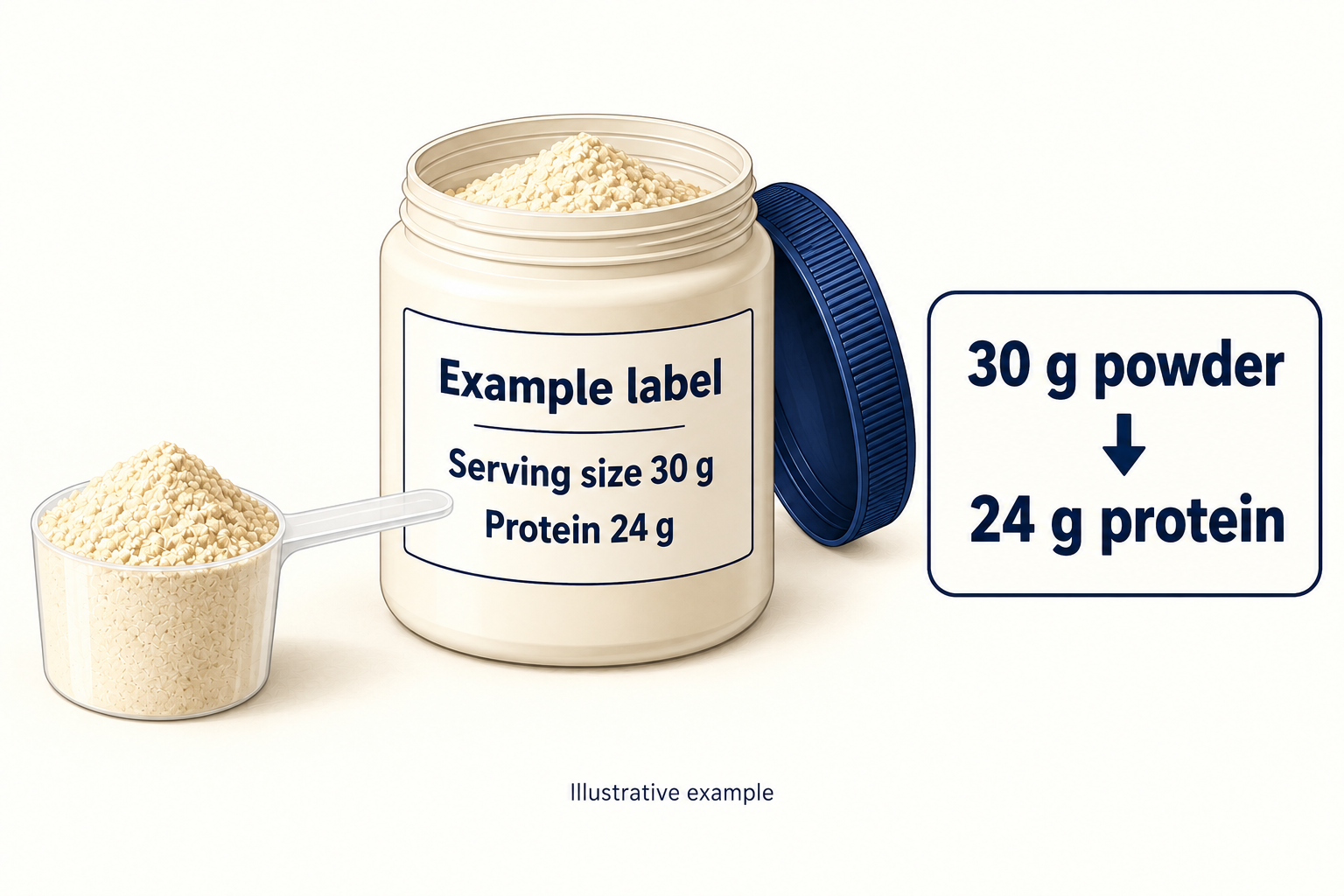
Read the serving size alongside the protein amount. On dietary supplements, the Supplement Facts panel lists serving information and quantities; other ingredients appear in the ingredient statement. [5]
If a hypothetical serving weighs 30 grams and lists 24 grams of protein, that serving supplies 24 grams of protein—not 30. The serving weight includes everything in the powder. These numbers are an illustration, not a claim about a particular product.
Does a scoop replace a meal?
Concentrating protein does not turn it into a complete diet. Colorado State University’s nutrition center explains that protein foods provide nutrients beyond protein and that supplements are generally meant to complement food. A product’s processing method also cannot establish whether you personally need it. [1]
For context on daily amounts, use the PureCalc protein intake calculator to explore adult reference estimates and their limitations. It is a way to understand the arithmetic, not a recommendation to buy powder or add a particular number of scoops.
Sources
- Colorado State University, Kendall Reagan Nutrition Center: Do I need to use protein powders?
- Tetra Pak Dairy Processing Handbook: Milk and whey fractionation — processing-equipment manufacturer reference.
- Tetra Pak Dairy Processing Handbook: Milk and whey powdered ingredients — processing-equipment manufacturer reference.
- Roquette: NUTRALYS pea protein isolates — manufacturer documentation used only for its process description, not health or superiority claims.
- FDA: Dietary Supplement Labeling Guide, Chapter IV.
General educational information. Not individualized nutrition or medical advice.