Weight & Body guide
How to Measure Your Waist for a Waist-to-Height Ratio
By PureCalc Editorial Team · Published · Educational guide
A waist-to-height calculation starts with two measurements. A carefully entered number is only useful if the tape was in the intended place. This guide focuses on getting a consistent measurement before exploring the calculator’s adult reference bands.
Step 1: Find your ribs and hip bone
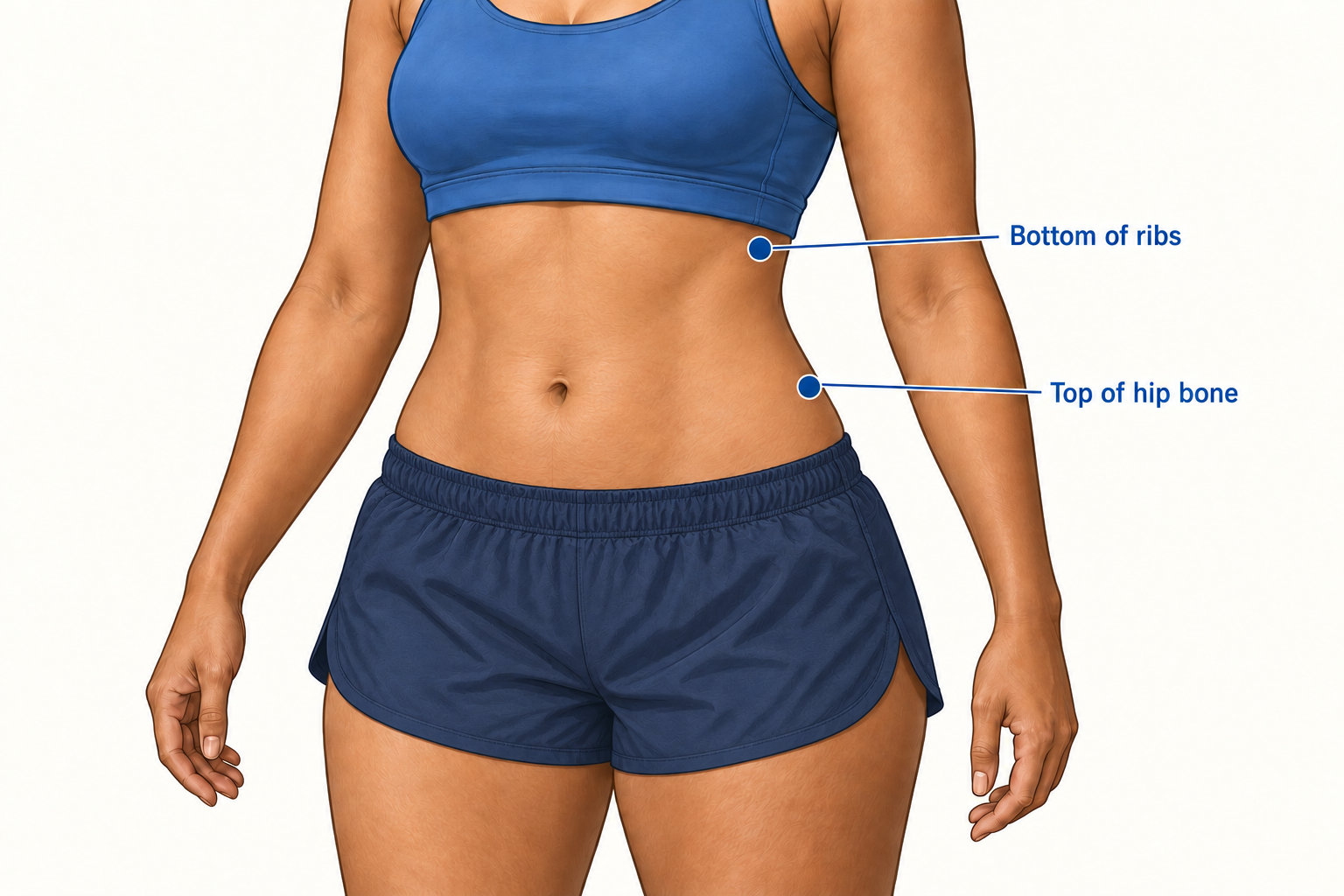
Use a flexible measuring tape and check whether it shows centimeters or inches. Before wrapping it around your waist, locate the bottom of your ribs and the top of your hip bone. These two landmarks determine the measurement level.
Source: NICE NG246: Assessing overweight, obesity and central adiposity.
Step 2: Find the point halfway between
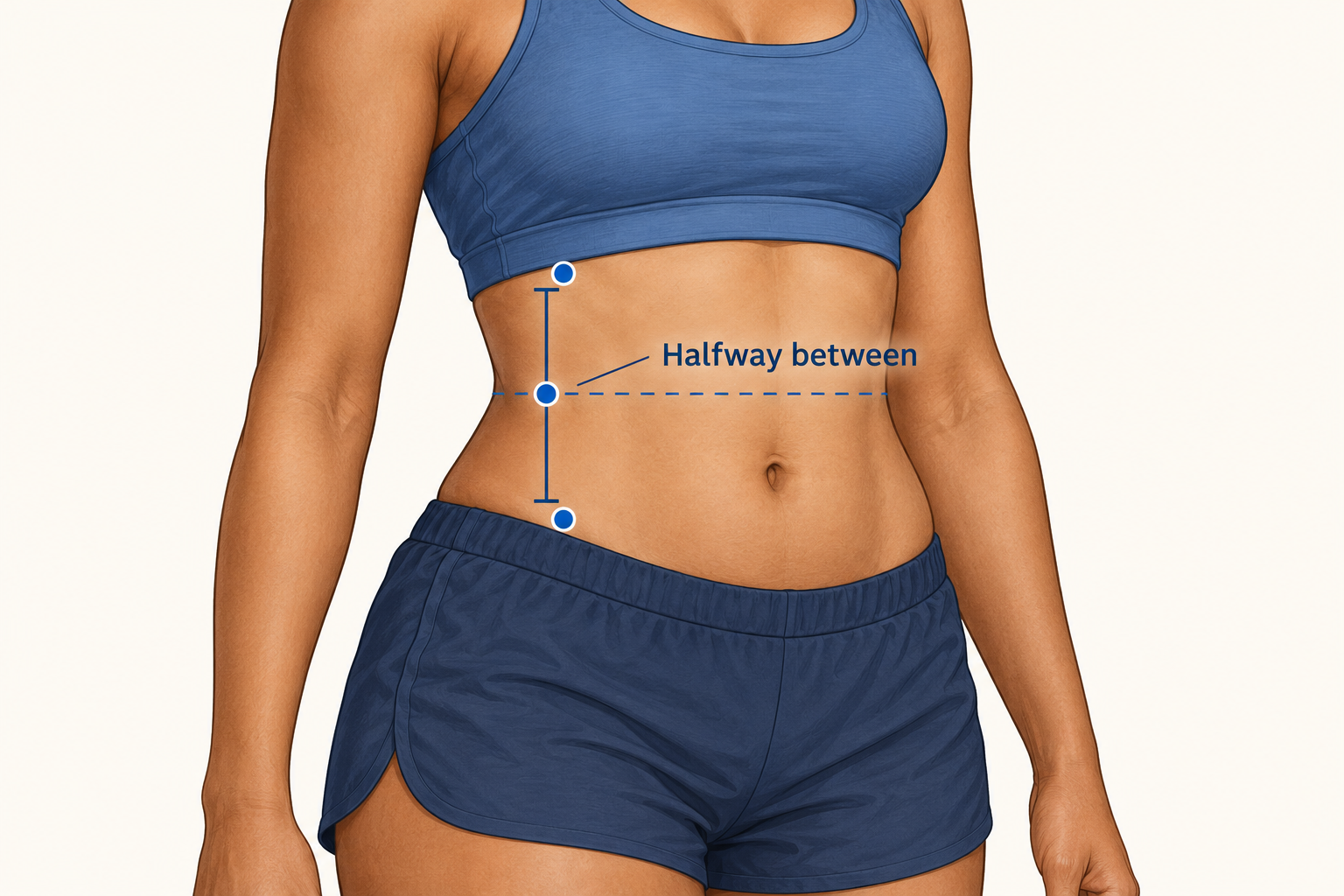
Find the midpoint between those two landmarks. This is the level at which the tape will go around your body. Do not assume your trouser waistband or belly button marks that midpoint.
Source: NICE NG246: Assessing overweight, obesity and central adiposity.
Step 3: Wrap the tape and keep it level
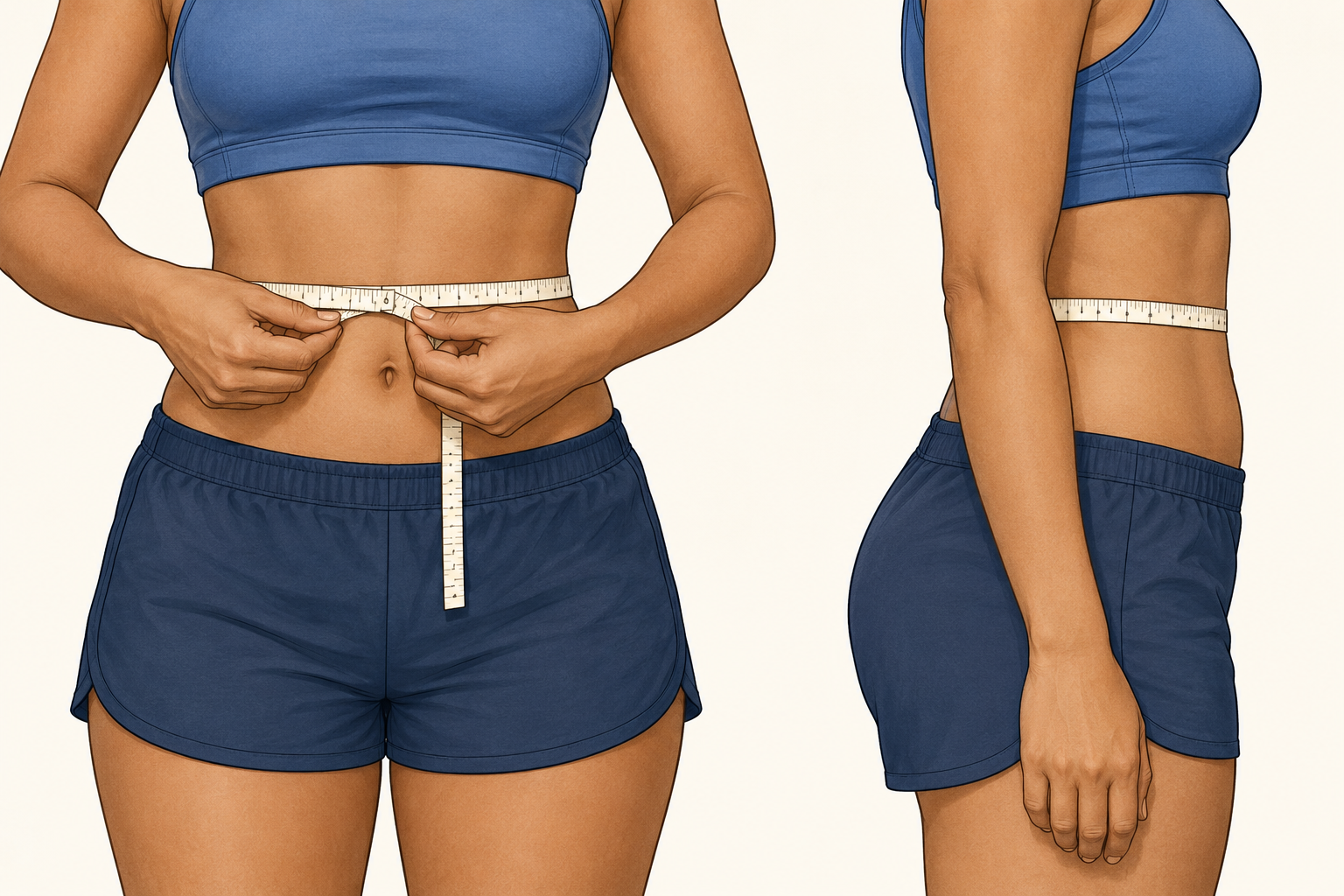
Wrap the tape around your waist at the midpoint. Keep it flat and level all the way around, with a snug fit that does not press into your skin. A mirror or another person can help you check the back.
If the tape slopes, twists or slips, reposition it before reading. Avoid pulling it tighter to obtain a smaller number.
Step 4: Breathe out naturally and read
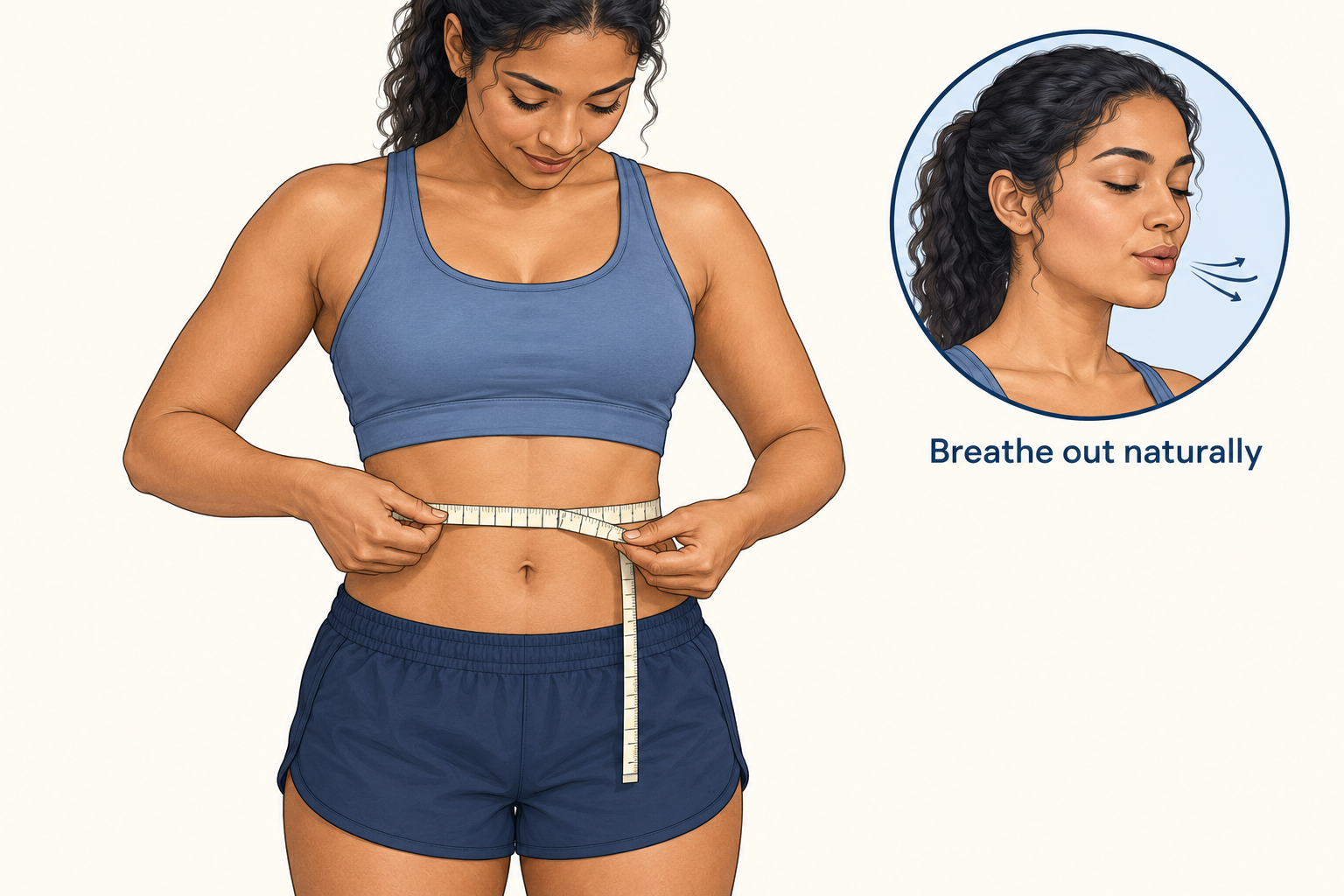
Breathe out normally, then read the tape where it overlaps. Keep your abdomen relaxed rather than sucking it in. If the reading is hard to see or the tape moves, reposition it and repeat.
Source: NICE NG246: Assessing overweight, obesity and central adiposity.
Step 5: Write down your measurement and unit
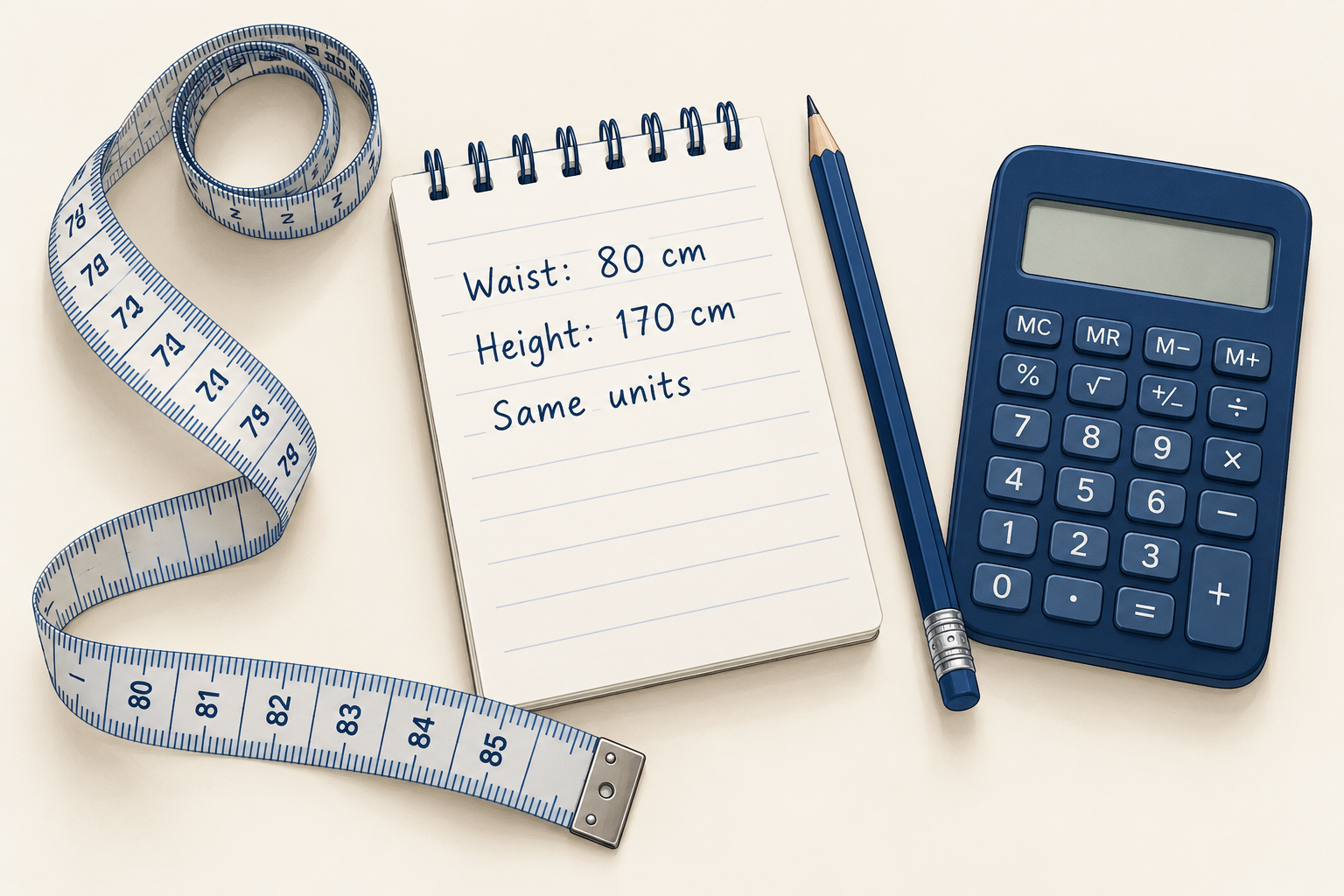
Record the waist measurement and its unit together. Keep your height in the same units when you calculate the ratio. The pictured 80 cm waist and 170 cm height are examples, not recommended targets.
For future comparisons, note the method you used. Measurements taken at different levels on the abdomen should not be treated as an exact like-for-like comparison.
Keep waist and height in the same units
The formula is waist circumference divided by height. For example, 80 cm divided by 170 cm gives approximately 0.471. Dividing 80 cm by 67 inches would mix units and produce a meaningless result.
If your height is 5 feet 7 inches, convert it to 67 inches before using inches for both measurements. Alternatively, enter both values in centimeters. Switching both measurements by the same conversion factor leaves the ratio unchanged.
A ratio of 0.471 is not a body-fat percentage. It means that the waist measurement is about 47.1% of the height measurement.
Small input differences can change a rounded result
At a height of 170 cm, a waist of 84 cm gives approximately 0.494; 85 cm gives 0.500. This illustrates why measurement consistency matters near a reference boundary. A calculator cannot decide whether a difference came from the body, tape placement or a typing mistake.
Keep the original measurements rather than recording only the displayed ratio. If a result seems surprising, check the tape reading, units and entered height before interpreting it.
Who can use the adult reference bands?
NICE recommends waist-to-height ratio alongside BMI for adults with BMI below 35. Our calculator provides adult interpretation only. Follow its eligibility instructions; it is not intended for pregnancy, eating disorders or conditions affecting height. The NHS tool describes these exclusions.
Is a clothing size good enough?
Use a measured circumference instead. A label on clothing is not a record of the measurement method used here. Likewise, waist-to-hip ratio is a different calculation: it divides waist by hip circumference, not height.
Once you have your waist and height in matching units, use the linked calculator. Its result is a screening reference to discuss in context, not a diagnosis or a personal weight-loss target.
Sources and editorial notes
- NICE NG246: Assessing overweight, obesity and central adiposity
- NHS: Calculate your waist to height ratio
Sources checked October 20, 2026. Examples are illustrative. This article provides general education, not diagnosis or an individual treatment plan. Cited organizations do not endorse PureCalc.